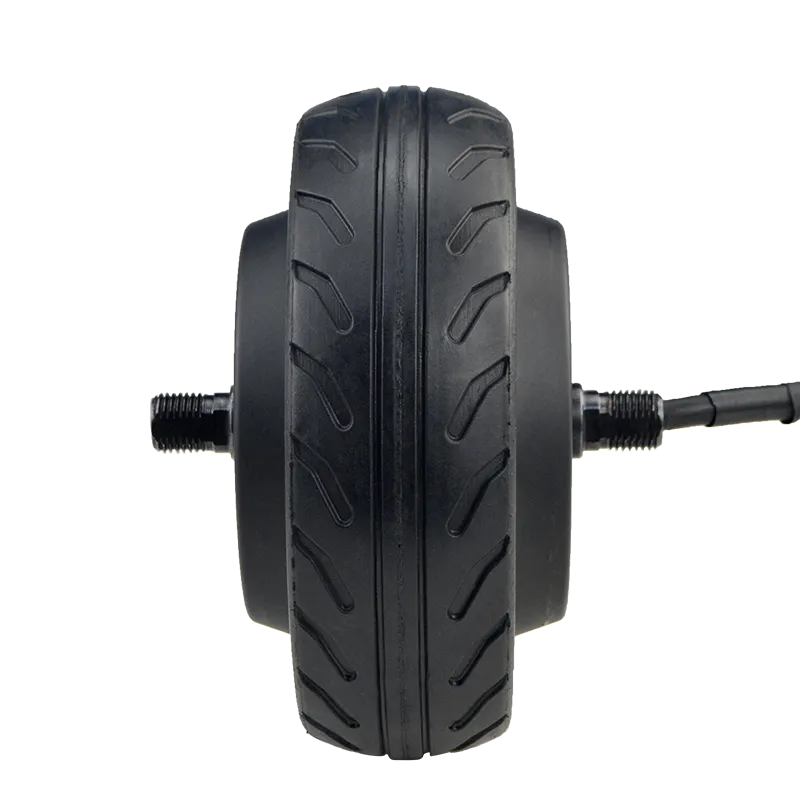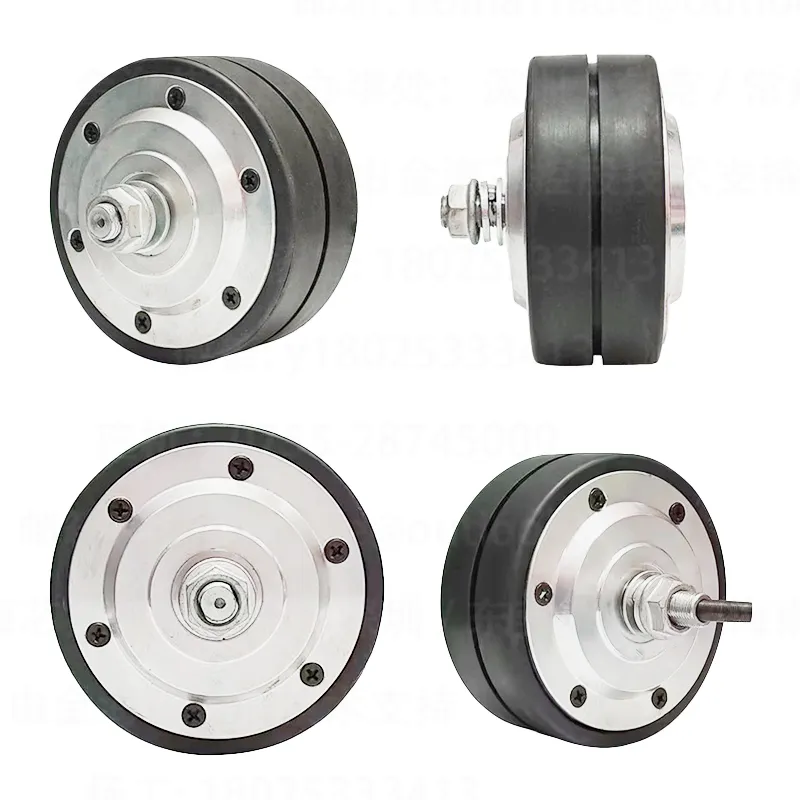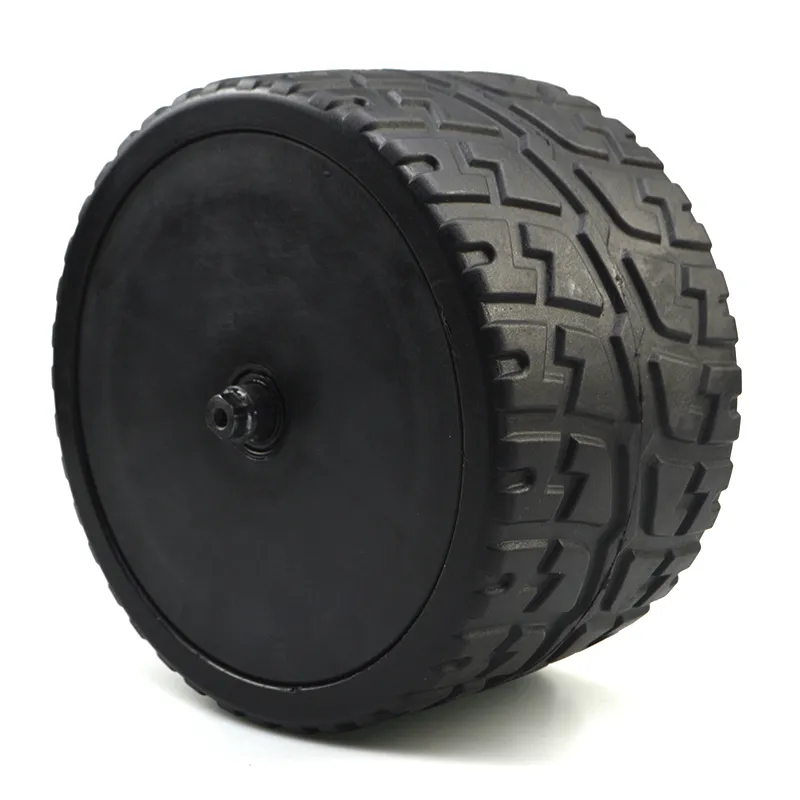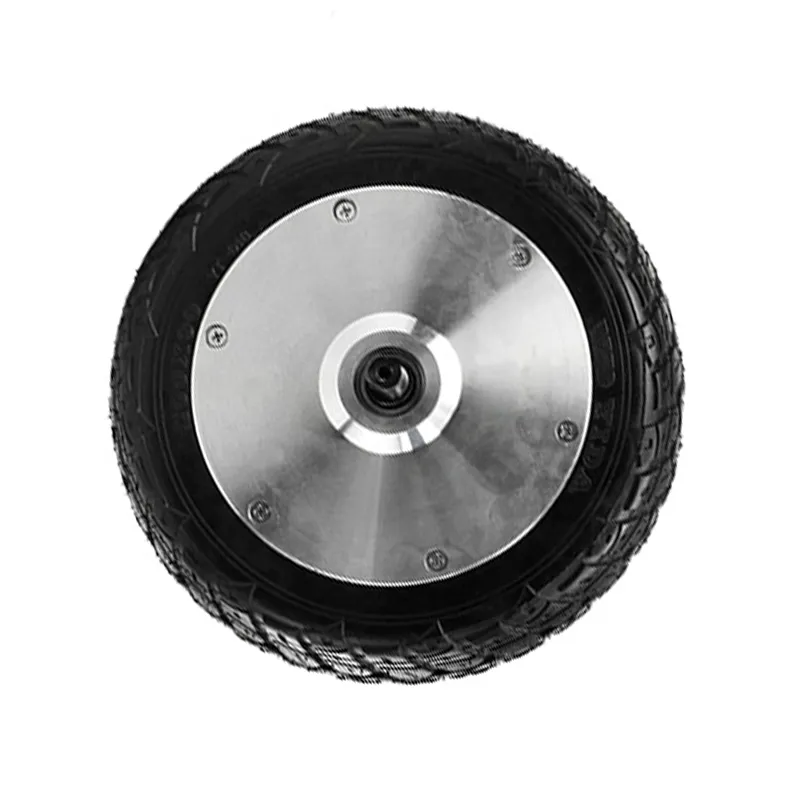
This technical note examines the 100mm standard open‑slot hub motor architecture developed for retrofitting industrial logistics vehicles. It focuses on design rationale, compatibility with mainstream sliding‑type (translational) transfer chassis, modular advantages for rapid deployment, and an installation checklist that field technicians can apply immediately.
Many logistics equipment retrofit projects encounter similar obstacles: non‑standard mounting bores, time‑consuming chassis machining, inconsistent assembly quality across workshops and prolonged downtime during conversion. Typical retrofit schedules extend 2–6 weeks per vehicle when custom adapters or hub re‑machining is required, and asset downtime directly increases operational costs. Industry surveys indicate that mechanical adaptation and on‑site rework account for approximately 40–60% of retrofit labor hours on average.
The 100mm open‑slot (open‑bore) interface is specified to match the most common axle and wheel hub geometries used in modern sliding transfer and pallet movers. The standard achieves:
Analysis of representative chassis from major logistics OEMs shows that a 100mm open‑slot hub motor can be installed without additional frame machining in approximately 75% of models evaluated. The reasons are:
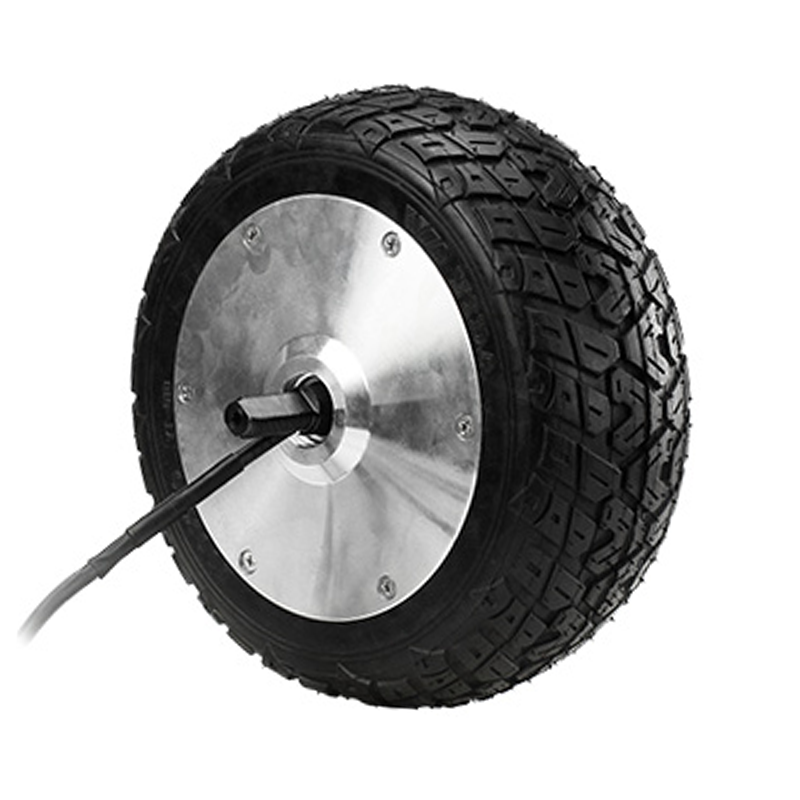
A modular hub motor concept separates the electrical drive module, mechanical mounting collar and serviceable brake/sensor subassembly. This architecture delivers measurable operational benefits:
The following installation workflow is optimized for field teams retrofitting sliding‑type transfer vehicles with a 100mm open‑slot hub motor.
| Step | Action | Expected outcome / acceptance |
|---|---|---|
| 1 — Pre‑check | Verify 100mm bore clearance, bolt circle, and cable passage paths. | No machining required if bore within ±2mm and bolt pattern compatible. |
| 2 — Dry fit | Place motor module, align keying features and mark fastener locations. | Uniform contact, no visible gaps >0.5mm. |
| 3 — Secure & torque | Use calibrated torque wrench; follow factory torque map. | Bolt torque within ±5% of spec; no thread runout. |
| 4 — Functional test | Low speed rotation, encoder verification, brake apply/release test. | Encoder increments correct; braking torque meets spec. |
In a recent deployment, a 40‑vehicle retrofit program for a large e‑commerce logistics center adopted a 100mm standard open‑slot hub motor with modular collar kits. Results across the pilot fleet included:
When specifying a 100mm open‑slot hub motor for industrial logistics applications, procurement teams should require: detailed mechanical drawings (3D STEP files), electrical pin‑outs, torque maps, environmental sealing ratings (IP65 or higher for washdown environments) and factory acceptance test (FAT) protocols. OEM/ODM flexibility for customized flange patterns and encoder/resolver options enables straightforward integration with legacy vehicle controllers.
By standardizing the interface and adopting modular assembly, logistics operators and integrators can significantly reduce conversion complexity, control retrofit costs and accelerate adoption of intelligent drive systems across mixed fleets.
OEM/ODM customization options are available for flange patterns, encoder types, and brake subsystems to match specific chassis requirements and fleet management systems.
 110
|
110
|
 dual-axis threaded hub motor
hub motor durability
trailer hub motor for camping
hub motor selection guide
75
|
dual-sided threaded shaft
industrial motor installation precision
automation drive stability
BLDC hub motor
high-torque motor applications
dual-axis threaded hub motor
hub motor durability
trailer hub motor for camping
hub motor selection guide
75
|
dual-sided threaded shaft
industrial motor installation precision
automation drive stability
BLDC hub motor
high-torque motor applications